Best Tide Pools in San Diego
Last checked
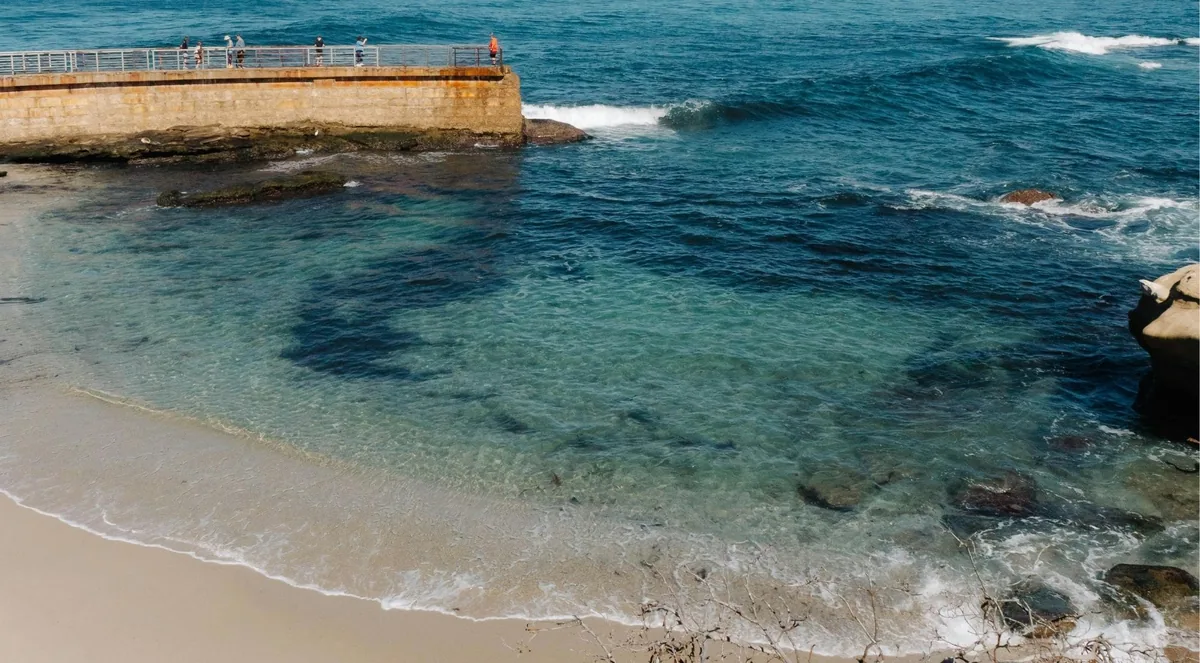
San Diego has miles of sandy beaches, but some of its most interesting coastline only appears when the ocean pulls back.
At low tide, rocky reefs that normally sit beneath the Pacific are exposed, and the pools left between them hold anemones, crabs, limpets, snails, sea stars, small fish and other intertidal life.
The phrase that matters is at low tide. You can go to exactly the right beach and see almost nothing if the water is too high.
For first-time visitors, the strongest tide-pooling areas are:
- The La Jolla coastline
- Cabrillo National Monument
- Dike Rock near La Jolla Shores
- Shell Beach and the Children’s Pool area
- Sunset Cliffs and Point Loma
Dates and live prices
When the tide is too high for the rocks
Every tide pool on this page is free to visit, but only for a few hours around low water. The guided snorkel over the La Jolla reserve shows you the same coastline's marine life from the water, on any calm day and at any tide.
Booking through this panel costs you nothing extra and pays this site a commission. It has no bearing on what is recommended above.
Best San Diego Tide Pools at a Glance
| Location | Best for |
|---|---|
| La Jolla coastline | Best overall mix of tide pools and sightseeing |
| Dike Rock | Dedicated tide pooling and marine life |
| Shell Beach | Easy tide pools near La Jolla Cove |
| Children’s Pool area | Tide pools plus harbor seals |
| Cabrillo National Monument | The most extensive protected tide-pool area |
| Sunset Cliffs | Tide pooling plus dramatic coastal scenery |
| Windansea area | Rocky shoreline and La Jolla scenery |
La Jolla appears four times in that list because its rocky shoreline runs for miles, so the closest thing San Diego has to a tide-pool district is one neighborhood.
On the water
Snorkel, kayak and paddle trips along the La Jolla coast
Guided snorkels over the La Jolla Underwater Park, sea-cave paddles past the seven caves and gear rentals at La Jolla Shores, near Dike Rock.
1. La Jolla Tide Pools — Best Overall
For most San Diego visitors, La Jolla is the easiest place to combine tide pooling with everything else you came to see.
The rocky coastline extends for miles, and exposed intertidal areas appear in many places when the tide drops. That gives you several possible spots instead of one small site.
Possible marine life includes sea anemones, crabs, limpets, barnacles, sea stars, sea slugs, sea hares, octopuses, snails and small fish. What you see on the day depends on the tide, the exact spot and luck.
Why La Jolla is especially good
A tide-pooling trip here combines easily with La Jolla Cove, the sea lions and harbor seals, La Jolla Shores, the Coast Walk, Sunny Jim’s Sea Cave, snorkeling and kayaking.
So even if the pools are less impressive than you hoped, there is plenty else to do within a short walk. Our La Jolla tide pools guide covers each spot in more detail.
2. Dike Rock — Best La Jolla Tide-Pooling Spot
If tide pooling itself is the goal, Dike Rock is one of the strongest places to start.
It lies near the northern end of La Jolla Shores, close to Scripps Pier. At a low enough tide, large sections of rocky intertidal habitat are exposed.
Most people at La Jolla Cove are there for the scenery and the sea lions. Dike Rock feels much more like a place people come to for the pools.
Why choose Dike Rock?
It offers a broad rocky intertidal area, many pools and channels at low tide, an easy pairing with a La Jolla Shores beach day, and good opportunities for families interested in marine life.
3. Shell Beach — Best Tide Pools Near La Jolla Cove
If you are already exploring central La Jolla, Shell Beach is one of the easiest tide-pool stops.
The small beach sits between La Jolla Cove and Children’s Pool along Coast Boulevard, and at low tide the rocky areas around it are exposed.
Its advantage is location. On the same walk you can see La Jolla Cove, the California sea lions below the Scripps Park walkway, the Shell Beach tide pools and the harbor seals at Children’s Pool.
That makes Shell Beach particularly useful if tide pooling is only one part of your day.
4. Children’s Pool Area — Best for Tide Pools Plus Seals
Continue south from Shell Beach and you reach Children’s Pool. The rocky shoreline around it can expose more tide-pool habitat at low water.
The bonus is wildlife. Children’s Pool is one of La Jolla’s main Pacific harbor seal haul-out areas.
The beach itself is closed to the public from December 15 to May 15 each year for harbor seal pupping season, although you can still watch the seals from the seawall walkway and other public viewing areas.
5. Cabrillo National Monument Tide Pools — Best Dedicated Tide-Pool Experience
If you want the most substantial tide-pooling outing in San Diego, Cabrillo National Monument is hard to beat.
This is not a small patch of rocks beside a busy city beach. The tide pools are part of a protected coastal ecosystem on the tip of Point Loma, managed by the National Park Service. Unlike the La Jolla shoreline, Cabrillo charges a park entrance fee, and the tidepool area keeps park hours: the park opens at 9 a.m. and the tidepools close at 4:30 p.m.
What can you see?
Depending on which part of the intertidal zone is exposed, possible animals include anemones, keyhole limpets, snails, whelks, sandcastle worms, sea stars, nudibranchs, sea hares, urchins, fish, spiny lobsters and octopuses.
The lower intertidal zone is uncovered only during especially low tides, which is why tide height matters so much here.
What Tide Is Best at Cabrillo?
The National Park Service recommends a tide of 0.7 feet or lower for the best chance of exploring the pools.
A lower tide generally means more rock exposed, more pools you can reach, access to the lower intertidal habitat and a better chance of seeing species that stay underwater at an ordinary low tide.
When Should You Arrive?
Think of the useful tide-pooling window as the period around low tide.
For the best visit, come on the falling tide and stay through the lowest point. That way you are not racing the water back over the rocks.
At Cabrillo, also check that the low tide falls before the tidepool area closes at 4:30 p.m.
Best Season for Cabrillo Tide Pools
Cabrillo is at its best in late fall and winter, when the lowest tides of the year fall in daylight and during park hours.
San Diego has tide pools all year, but winter often gives you the best daytime tide-pooling.
6. Sunset Cliffs Tide Pools — Best for Dramatic Scenery
Sunset Cliffs Natural Park is famous mainly for its cliffs and ocean views, but rocky intertidal habitat is also exposed below parts of the park at low tide.
This stretch of coast combines tide pools, sea caves, coastal bluffs, rock formations, sunset views and open-ocean scenery.
Important safety warning
This is not the place to improvise your own route down a steep cliff.
The shoreline can be hazardous during high surf, a rising tide, large waves and wet conditions. Use established access points, and if the water looks rough, enjoy the cliffs from above instead.
7. Windansea — Best for Combining Tide Pools With a Scenic La Jolla Drive
At the southern end of La Jolla’s main tide-pool stretch is Windansea Beach.
Windansea is known mainly for surfing, its rocky coastline, photography and sunsets. At a low enough tide, though, its exposed rock shelves also reveal pools and intertidal life.
It works well if you are already driving the La Jolla coastline, want tide pools and photographs in one stop, or plan to stay for sunset.
For families whose only priority is tide pooling, Dike Rock or Cabrillo will usually be easier.
La Jolla vs Cabrillo: Which Has Better Tide Pools?
Both are excellent, but they suit slightly different visitors.
Choose La Jolla if you want:
- Free access
- Several possible locations
- Tide pools plus sea lions and seals
- Restaurants nearby
- La Jolla Cove
- Beaches and kayaking
- A flexible sightseeing day
Choose Cabrillo if you want:
- A dedicated tide-pool destination
- Extensive protected intertidal habitat
- National Park Service rangers and exhibits
- A more nature-focused outing
- Point Loma scenery
If tide pooling is your main goal, Cabrillo is the more focused trip. If this is your first visit to San Diego, La Jolla is easier to combine with the city’s other big coastal sights — see our best beaches in San Diego guide for the rest of that coastline.
When Is the Best Time to See Tide Pools in San Diego?
When the tide is low enough.
Morning, afternoon, sunset, weekend and month matter far less than the tide table. A low tide can fall at 7 a.m. one day and 3 p.m. a few days later, because the timing shifts every day.
Check the tide prediction for your exact date before you go.
Do You Need a Negative Tide?
No. You can see tide pools without a negative tide.
Negative or near-zero tides, though, often expose much more of the coastline. If your trip spans several days, compare the low tides and pick the lowest one that falls in daylight.
Why Winter Can Be Better Than Summer
This surprises many visitors.
Summer is the obvious beach season, but it is not always the best tide-pool season. Many of summer’s lowest tides happen at night, while fall and winter more often bring very low tides in daylight.
So winter can be excellent for tide pooling, coastal walks, marine life and photography, even when it is too cool for a traditional beach day.
What Can You See in San Diego Tide Pools?
Possible sightings include sea anemones, hermit crabs, shore crabs, limpets, barnacles, snails, mussels, sea stars, sea urchins, sea hares, nudibranchs, octopuses and small fish.
No two visits are the same. What you find varies with the tide height, the season, the water temperature, the exact microhabitat, recent waves and luck.
Can You Touch Tide-Pool Animals?
It is better not to.
Repeated touching can stress delicate animals, and some are attached to the rock so firmly that they can be injured if someone tries to pull them off.
The better approach is simple: look, photograph and leave everything where it is.
Can You Collect Shells?
In protected areas, do not remove anything, living or dead. That includes shells that look empty.
A shell can become a home for a hermit crab or play another part in the ecosystem, so the responsible habit is to leave natural material where you find it.
Tide-Pool Safety
A rocky shoreline is far less forgiving than a sandy beach.
Wear shoes with gripping soles, never turn your back on the ocean, watch for the rising tide, avoid algae-covered rock, stay away from unstable cliffs and keep children close.
Best Tide Pools for Kids
La Jolla is best for combining wildlife with other attractions. Cabrillo offers the most educational visit, with rangers and exhibits. Shell Beach works well for a shorter stop.
The most important question is not which spot holds the most species. It is where your child can explore safely, away from large waves and difficult terrain.
Best One-Day San Diego Tide-Pool Itinerary
If you have a very good morning low tide:
Morning — Cabrillo National Monument
Arrive before the lowest part of the tide.
Midday — Point Loma
Explore the rest of the national monument and the coastal views.
Afternoon — La Jolla
Drive north toward La Jolla Cove.
Late afternoon — La Jolla Cove and wildlife
Watch the sea lions from the walkway above Point La Jolla, then the harbor seals around Children’s Pool.
Sunset — Windansea
Finish on La Jolla’s rocky southern coastline.
Best La Jolla Tide-Pool Walking Routes
Option 1: Central La Jolla
La Jolla Cove → Shell Beach → Children’s Pool
Best for easy sightseeing, sea lions and seals, and short tide-pool stops.
Option 2: La Jolla Shores
La Jolla Shores → Dike Rock → Scripps Pier area
Best for more dedicated tide pooling, beach walking and families. La Jolla Shores is also the most comfortable swimming beach nearby — see our guide to the best swimming beaches in San Diego.
The Bottom Line
For the best tide pools in San Diego, start with two areas.
Go to La Jolla if you want tide pools combined with beaches, sea lions, harbor seals and other sightseeing.
Go to Cabrillo National Monument if tide pooling is the main event and you want to explore a large, protected rocky intertidal area.
Within La Jolla, choose Dike Rock for a more dedicated tide-pool outing, or Shell Beach for something easy to combine with La Jolla Cove.
Wherever you go, the location is only half the plan. Check the tide first, then choose where to go.
Best Tide Pools in San Diego — FAQ
Where to go, which tide to wait for, and what you may find.
The strongest options are La Jolla and Cabrillo National Monument. Sunset Cliffs also has rocky intertidal areas you can reach at low tide.
Dike Rock is excellent for dedicated tide pooling, while Shell Beach is more convenient if you are already visiting La Jolla Cove.
Low tides expose the intertidal zone, and very low tides give you the most to explore. At Cabrillo, the National Park Service recommends a tide of 0.7 feet or lower.
No, but lower tides expose more habitat.
Late fall and winter often bring the best daytime low tides.
They can be, but many of summer's lowest tides happen at night. Check the tide table for your dates.
Public access to the La Jolla shoreline is free. Cabrillo National Monument charges a park entrance fee.
Possible wildlife includes anemones, crabs, limpets, snails, barnacles, sea stars, sea hares, nudibranchs, fish, urchins and, occasionally, octopuses.
It is better to watch them without touching.
They can be excellent for children with close adult supervision and shoes that grip.
Still have questions? Email us at info@la-jolla-cove.org
Sources
- National Park Service, Cabrillo National Monument — Visit the Cabrillo Tidepools (nps.gov/thingstodo/visit-the-cabrillo-tidepools.htm): best low tides in fall and winter during park hours, a tide of 0.7 ft or lower recommended, tidepool area closes at 4:30 p.m.
- National Park Service, Cabrillo National Monument — The Rocky Intertidal Zone (nps.gov/cabr/learn/nature/tidepools.htm).
- City of San Diego — Children's Pool seasonal beach closure, December 15 to May 15 (sandiego.gov).