La Jolla Cove in Winter
Last checked
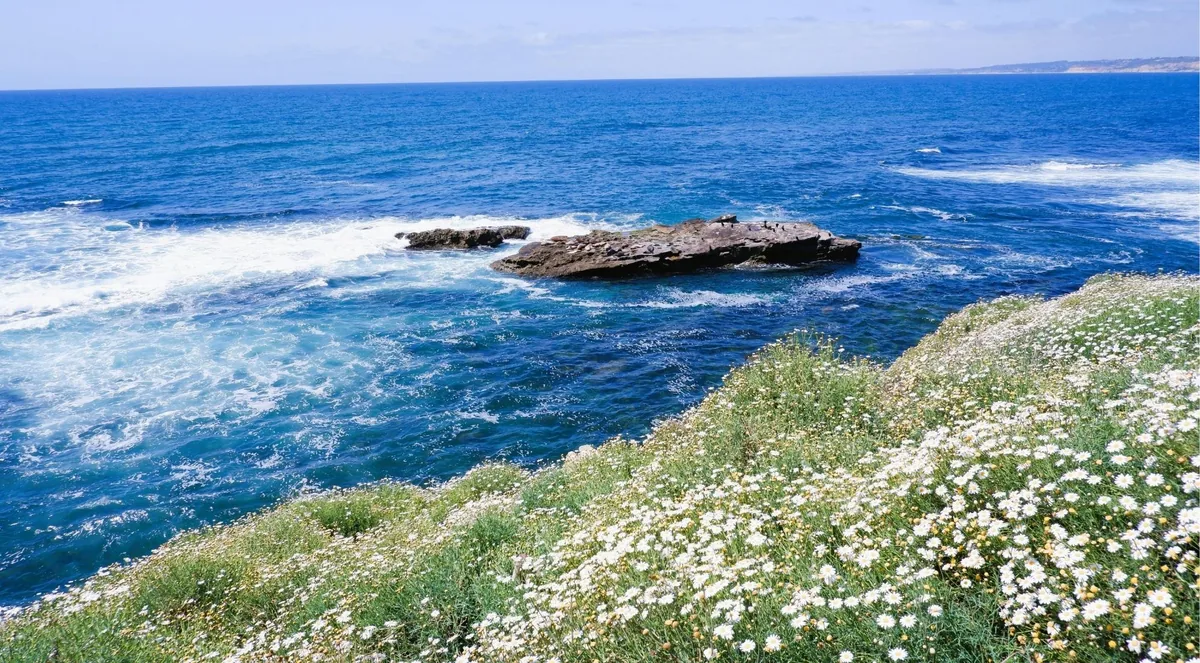
La Jolla Cove is a good winter stop if you come for the sea lions, the harbor seals, a coastal walk, the tide pools and a chance of a migrating gray whale. It is a less dependable season for swimming, snorkeling and kayak trips into the sea caves. A sunny afternoon can feel mild on shore, while the Pacific is cold and winter surf can make getting into the water a poor idea.
If you have only a day in San Diego, don’t write La Jolla off because it’s January. Plan around the tide, the swell and the daylight, not just the temperature on your weather app. Your best winter moment may be a rock pool at low tide, a harbor seal resting below the Children’s Pool seawall or a clear sunset over the water, and a beach day in swimwear is unlikely to be one of them.
For a first winter visit, take the shoreline walk from La Jolla Cove toward Children’s Pool, look for sea lions and harbor seals from the public viewing areas, and time Shell Beach for a safe daylight low tide. Add a sea-cave kayak tour only if conditions suit and you would still enjoy the paddle if the guide can’t enter a cave. The Cove and the coastal path were open at our last check in November 2026; the La Jolla Cove status page tracks the closures and the debate over a partial seasonal closure of the Cove.
Dates and live prices
Kayaking the sea caves in winter
The paid trip most winter visitors consider is a guided kayak tour along the cliffs below the Cove. It launches from La Jolla Shores, about a mile north, and from December to February the guides decide on the water whether the swell allows a cave entry. Pick a date early in your stay so you can rebook if the sea is rough. Live dates and prices below.
Booking through this panel costs you nothing extra and pays this site a commission. It has no bearing on what is recommended above.
Winter at La Jolla Cove: The Essentials
| Question | Practical answer |
|---|---|
| Is La Jolla Cove open in winter? | Yes, at our last check in November 2026. The Cove is a public beach with a lifeguard station staffed year-round; a partial seasonal closure has been debated but not adopted, so check the status page before you go. |
| Is December, January or February best? | All three work. The gray whale migration starts in December; January is a strong month for whale watching and winter low tides; February can be good for harbor seal pups and northbound whales. Sightings vary. |
| Will it be warm enough for a walk? | Often, yes. Coastal San Diego usually has mild winter days, but evenings, wind and the occasional rain call for layers. |
| Can you swim or snorkel? | Sometimes, if conditions and your experience allow. Cold water, surf, currents, visibility and water-quality advisories matter more than sunshine. |
| Do kayak tours operate? | Some operators run winter tours, but launches, cave entry and routes depend on ocean conditions. Check the operator’s cancellation and cave-entry policy. |
| Where are the sea lions? | In and around La Jolla Cove; watch them from outside the year-round Point La Jolla and Boomer Beach closure. |
| Where are the harbor seals? | At Children’s Pool, a short walk southwest of the Cove. The beach itself closes to people December 15–May 15 for pupping season. |
| Are tide pools good in winter? | Often excellent during daylight low tides; check the surf as well as the tide height. |
| How long should you allow? | About 1.5–3 hours for the Cove, the wildlife and nearby viewpoints; half a day if you add tide pooling, a café or the cave shop. |
| Is there an entrance fee? | No ticket is needed for the Cove or the public shoreline viewpoints. Tours, attractions and some parking cost extra. |
On the water
Other ways to see the La Jolla coast in winter
Kayak trips from La Jolla Shores, guided snorkels over the reserve at La Jolla Cove, walking tours of La Jolla Village and whale-watching cruises out of Mission Bay during the gray whale migration.
What Winter Feels Like at La Jolla Cove
Think light-jacket weather, not tropical beach weather. San Diego’s coastal winter is usually much gentler than winter in most of North America or northern Europe, but it isn’t reliably hot. A clear afternoon can be lovely for sitting above the Cove. After sunset or in a sea breeze, the same spot can feel chilly.
December through February is also part of Southern California’s wetter season. Rain isn’t an everyday certainty, and several dry days can follow a passing storm. If you only have one winter day in the area, keep the plan flexible enough to swap a water activity for the aquarium or a café.
The Pacific is the bigger surprise for visitors arriving from inland hotels: the sea off La Jolla averages about 59–61°F (15–16°C) from December to February, by NOAA’s Scripps Pier readings, and it varies from year to year and day to day. Don’t judge it by the warm sunshine on the pavement. A well-fitting wetsuit helps for longer swims, but it does not make rough surf or poor visibility safe.
What to wear: a T-shirt or long-sleeved top, a fleece or light jacket, comfortable shoes with grip and a wind-resistant outer layer. Add a rain layer if rain is forecast, and bring dry clothes if you book an activity that may leave you wet.
Seven Things to Do at La Jolla Cove in Winter
1. Watch the Sea Lions From the Cove Promenade
Best for: almost everyone, including people with limited time.
You don’t have to get in the water to see some of La Jolla’s most memorable wildlife. California sea lions haul out on the rocks in and around the Cove all year. You may hear them barking before you spot them; on a busy day, a small stretch of rock can look like a crowded waiting room.
Use the public paths and the viewing areas. Point La Jolla and Boomer Beach are closed to the public year-round, not just during pupping season. Don’t cross barriers or approach the animals for photos. Never feed, touch or chase them, or pose beside them, even if they seem sleepy or used to people. Sea lions can bite and move quickly.
Good to know: this is wildlife watching, and the animals’ positions and numbers change with the surf, the tide and their own behavior. A sea lion may also come up on the Cove beach or in the water; follow the lifeguards’ instructions and don’t try to move it.
2. Look for Harbor Seals and Pups at Children’s Pool
Best for: wildlife lovers and families who can watch quietly from a distance.
Children’s Pool is not the same place as La Jolla Cove. It’s a short walk southwest, easy to spot by its curved seawall. Harbor seals gather on the sand there, and winter and spring are pupping season; pups usually appear from late January.
The closure: the Children’s Pool beach is closed to the public every year from December 15 through May 15 to protect harbor seals during pupping season. You can watch from the seawall walkway and the viewpoints above; obey any extra seawall restrictions or signs posted on the day. You are there to watch the seals without disturbing them, and the closure is what makes that possible.
If you’re explaining the difference to children: harbor seals have short flippers and usually shuffle along on their bellies on land; sea lions have visible ear flaps and can turn their hind flippers forward to walk more upright.
Don’t promise pups: the closure protects the season, but there is no set date, number or place for births.
3. Visit the Tide Pools on a Safe Daylight Low Tide
Best for: curious adults, older children and photographers with sturdy shoes.
This may be winter’s best free activity. Winter often brings very low tides during daylight hours, uncovering a miniature coastline of anemones, snails, crabs and other creatures living among the rocks. Birch Aquarium and the National Park Service both point to winter as a good tide-pooling season.
Near the Cove, Shell Beach is a practical place to try when the tide and surf cooperate. Other La Jolla tide-pooling spots, such as Dike Rock farther along the coast, have different access, distances and hazards; don’t assume every rocky outcrop below the cliffs is safe to reach. Our La Jolla tide pools guide covers the main spots, and the December guide lists that month’s low tides.
How to plan it:
- Open NOAA’s La Jolla tide station and look up the predictions for your date.
- Aim for a daylight low tide; tides predicted below 0 feet are often the most interesting. That is a planning rule, not a safety threshold.
- Check the National Weather Service surf forecast and the lifeguard warnings. A very low tide can still be dangerous with a large swell or surging waves.
- Arrive before the lowest point of the tide, wear grippy shoes, stay on stable rocks and leave before the rising water cuts off your route.
- Look, photograph and leave marine life in place. Never pry creatures off the rocks or take home shells with animals living in them.
Skip tide pooling in heavy surf, after dark, if the access is slick or uncertain, or if waves are washing across the rock shelf. With small children, watching from higher ground or joining a naturalist-led program can be the better choice.
4. Try to Spot a Gray Whale From Shore
Best for: patient visitors with binoculars, from mid-December to March.
Winter is gray whale migration season past San Diego. The National Park Service at Cabrillo National Monument says the whales are visible from shore from mid- to late December through March, that most pass in late December, January and February, and that mid-January is the peak. Southbound whales heading for Baja California come first; the northbound return follows in February and March. You can only plan for the odds, never for a sighting on a given day.
From La Jolla, scan the ocean beyond the surf for a blow or a dark back breaking the surface. Higher viewpoints help; the Birch Aquarium overlooks, Torrey Pines and Cabrillo National Monument are the usual regional suggestions. You can be there in exactly the right weeks and see none.
Should you book a whale-watching boat? If seeing whales is a main reason for the trip and you are comfortable on boats, a cruise from Mission Bay or San Diego Bay gives you a far better chance than a short stop at the Cove, though still not a guarantee. The San Diego: 2.5-3 Hour Whale Watch Cruise Legacy Whale Watch leaves from Mission Bay with naturalists from the San Diego Natural History Museum and is rated 4.5 from 500+ reviews on GetYourGuide; the boat season runs from December to about mid-April. Before booking any cruise, compare the departure harbor, trip length, how rough the open water may be, the cancellation terms and what the operator offers if no whales are seen.
5. Walk the Shoreline, Not Just the Beach
Best for: first-time visitors, couples, photographers and mixed-age groups.
The best winter plan often has nothing to do with getting wet. Start at Ellen Browning Scripps Park, look down at the Cove and the cliffs around it, then stroll southwest along the public paths toward Shell Beach and Children’s Pool. You pass wave-worn rock, coastal plants, sea lions and the curve of the seawall without committing to a long hike.
For more cliff scenery, carry on toward Goldfish Point and the Coast Walk Trail. Check the state and accessibility of any section before you set off; uneven surfaces, steps and drop-offs make some stretches unsuitable for mobility aids or for walking in the wet.
Early sunset is a winter bonus: you can watch the last light over the Pacific before dinner without staying out late. Don’t go out onto the rocks after dark for a photograph.
6. Book a Kayak Trip With the Right Expectations
Best for: visitors happy with a guided ocean paddle even if the caves are off limits that day.
La Jolla’s best-known kayak trip starts from the La Jolla Shores area; you don’t launch from the little Cove beach. Tours usually follow the cliffs of the marine reserve and may approach the sea caves. Entering a cave, when it’s offered, depends on the waves and swell and on the guide’s judgment.
Winter brings more days with a strong swell. A departure may be moved or canceled, or a tour may go ahead without entering a cave. A tour sold as a “sea caves” trip does not mean you will paddle inside a cave. The two-hour La Jolla Sea Cave Kayak Tour, rated 4.5 from 800+ reviews on GetYourGuide, is the one most visitors book; our kayak tours guide compares the others. Before paying, ask:
- Where exactly do we meet and launch?
- What happens if cave entry is unsafe but the rest of the tour goes ahead?
- Can beginners and non-swimmers join under your rules?
- What ages, weight limits and fitness are required?
- Are wetsuits, life jackets and lockers included or extra?
- What is the cancellation and refund policy for weather and surf changes?
Our advice: book when your itinerary has some slack, and choose a guide who puts ocean conditions ahead of an advertised cave entrance. If this is your one chance to see the caves and getting inside is essential, winter is a risky season to count on it.
7. Snorkel Only When the Ocean Says Yes
Best for: confident snorkelers prepared for cold water, on calm days.
You can snorkel at La Jolla Cove in winter, but that doesn’t mean you should on the day you arrive. The water is cold, visibility varies and surf can make getting in and out difficult. Wind, waves and runoff after rain can spoil conditions even when the sky looks bright.
If you’re tempted, talk to the lifeguard on duty, check the advisories and wear proper thermal protection. Never swim or snorkel alone. If the sea is rough, watch the marine life from shore; you haven’t missed La Jolla’s defining experience. On a calm day, a guided trip such as the San Diego: La Jolla Cove Snorkeling Tour, Sea Lions & Caves (4.9 from 160+ reviews on GetYourGuide) supplies the wetsuit and a guide who knows the entry points.
For most first-time visitors: save snorkeling for a calm day or a warmer season, and use winter for wildlife and tide pooling.
Which Winter Month Should You Choose?
| Month | Strongest reasons to go | Trade-offs | Our verdict |
|---|---|---|---|
| December | Holiday atmosphere, sea lions, daylight low tides, start of the gray whale migration | Holiday crowds, early sunset, variable surf; the Children’s Pool beach closes December 15 | Best if you’re in San Diego for Christmas anyway; see the December guide |
| January | Whale migration at its mid-January peak, tide pools, harbor seal pupping season | Cold water and the chance of stormy days | The strongest winter month for wildlife |
| February | Harbor seals and possible pups, northbound whales, good coast-walking days | Conditions stay unpredictable; not a reliable swimming month | Good for wildlife and a relaxed coastal half-day |
These are tendencies, not guarantees. If tide pooling is the main goal, a safe low tide on a Tuesday beats an arbitrary “best month.” If kayaking is the main goal, a calm sea matters more than whether the date falls in January or February. For the rest of the year, see the best time to visit La Jolla Cove.
A 2–3 Hour Winter Itinerary at La Jolla Cove
Before you leave your hotel: check the tide, the surf, the rain and any posted closures. If a daylight low tide falls during your visit, reorder the walking stops around it.
| Time | What to do | Why stop |
|---|---|---|
| First 20–30 minutes | Start at Ellen Browning Scripps Park and the La Jolla Cove overlook | Get your bearings, watch the sea lions, look at the waves |
| Next 20–30 minutes | Walk to the public views of Point La Jolla and Shell Beach | Coastal scenery and wildlife without entering the water |
| Next 30–45 minutes, only if tide and surf allow | Explore the accessible tide pools | Your best chance to see intertidal life up close |
| Next 20–30 minutes | Continue to the Children’s Pool viewpoints | Harbor seals, the seawall and the pupping season |
| Remaining time | Return through the Village for coffee, lunch or sunset | An easy finish if it turns windy or wet |
With only one hour: skip the tide pools unless conditions line up perfectly. Enjoy the Cove and the sea lions, then walk toward Children’s Pool if time and mobility allow.
With children: bring snacks, keep off slippery rocks and don’t promise animal sightings or a beach to play on. For a bigger sandy beach and a playground, plan a separate stop at La Jolla Shores and Kellogg Park.
What if the Weather Turns Bad?
Winter plans work best with a Plan A and a Plan B in place of a rigid booking sequence.
| If conditions are… | Best choice | What to skip |
|---|---|---|
| Sunny and calm, safe low tide | Cove wildlife walk plus tide pools | No need to pay for a tour just to enjoy the coast |
| Sunny but high surf | Sheltered public overlooks, the Village, the aquarium | Rocks, hopes of a cave entry and casual snorkeling |
| Overcast but dry | Wildlife walk, coastal photos, cafés | Assuming clouds make the tide or surf safer |
| Rainy, or just after heavy rain | Birch Aquarium or indoor time in the Village | Swimming and snorkeling until the water quality is checked |
| Very windy | Short sheltered stops or indoor attractions | Exposed bluffs and marginal small-boat trips |
Rain and water quality: runoff can raise bacteria levels after storms. Check the San Diego County beach water-quality information and the lifeguards before going in the ocean. An open beach does not always mean the water is recommended for swimming.
How to Check Winter Conditions in Five Minutes
These checks tell you more than a general seasonal forecast:
- Tide: NOAA La Jolla tide predictions: find the time and height of the next low tide.
- Surf and weather: National Weather Service San Diego: look for high-surf advisories, coastal flooding and rain.
- Water quality: San Diego County Beach and Bay Water Quality: check posted advisories and closures.
- Beach rules: City of San Diego: La Jolla Cove, Children’s Pool and Point La Jolla, plus our La Jolla Cove status page.
- Paid activity: ask your tour operator about that day’s launch and cave-entry decision; a date still on sale online can still be canceled for swell.
Keep in mind: a low tide does not remove the risk from a large swell, and a sunny sky does not mean the water quality is good after a storm.
Getting There, Parking and Facilities
Where it is: La Jolla Cove is on the coast of La Jolla, a neighborhood of San Diego, next to Ellen Browning Scripps Park and below the Village’s shops and restaurants. It is a different place from La Jolla Shores, which lies farther around the coast and is where most kayak tours launch.
By car: street parking around Coast Boulevard and the Village can be scarce, especially on sunny weekends and holidays. Read the signs for time limits and paid zones; not every space is free or unrestricted. Leave extra time if you have a kayak booking at a set time. Our parking guide has the details.
Without a car: public transit and rideshares reach La Jolla, but a direct ride is often easier with children or on a tight schedule. Check your own route; the Cove and La Jolla Shores don’t share a stop.
Facilities: the City of San Diego lists a year-round lifeguard station at the Cove and outdoor showers among the beach amenities. Public restrooms are nearby; their hours and upkeep can change. The small beach is reached by stairs and may not suit visitors who can’t manage steps. Many of the wildlife views are reachable from the public paths above, although the full waterfront walk is not step-free throughout.
Budget: the Cove, most public viewpoints and the tide pools cost nothing. Allow for food, transport, possible paid parking and any optional activities. You don’t need a ticket to see the sea lions; our free things to do in La Jolla list has more.
Who Should Visit La Jolla Cove in Winter, and Who Might Skip It?
Go if you enjoy wildlife, geology, photography, easy coastal walking or a memorable stop during a San Diego trip. Winter offers several good outdoor experiences that don’t involve going in the ocean.
Go with flexibility if you want guided kayaking. Choose a provider with a clear weather policy, don’t pin everything on a cave entry and be ready to change plans.
Consider another season if your must-do is comfortable swimming, warm-water snorkeling or reliably calm sea-cave kayaking. Some winter days are good for the water, but you can’t count on them.
Choose a different beach for a classic sandy beach day: La Jolla Cove is tiny and rocky; La Jolla Shores suits families who want space to sit and play, although winter water conditions still matter there.
Should You Visit La Jolla Cove in Winter?
For first-time winter visitors, La Jolla Cove is a strong yes, as long as you come for the coastline and the wildlife and not for a guaranteed water adventure. Its winter combination is easy to underestimate: barking sea lions, harbor seals resting at Children’s Pool, tide pools on a calm low-tide afternoon and a chance, never a promise, of a migrating whale offshore.
Start with the free coastal walk. Make the tide the centerpiece if conditions are right. Treat kayaking and snorkeling as options to judge on the day, and check the tide, surf and closure pages the evening before, because winter conditions can change overnight.
Keep Planning
- La Jolla Cove in December: Christmas-period logistics, December weather and holiday ideas.
- Christmas in La Jolla: the 2026 parade, the La Valencia tree lighting, Christmas Day dining and itineraries.
- Best Time to Visit La Jolla Cove: the month-by-month comparison across the full year.
- La Jolla Tide Pools: locations, access and what to look for.
- La Jolla Coast Walk Trail: a longer walking route along the cliffs.
- Free Things to Do in La Jolla: how to enjoy the coast without a paid activity.
- La Jolla Cove Status: current closures and the debate over the Cove.
- La Jolla Kayak Tours: the sea-cave kayak trips compared.
La Jolla Cove in Winter — FAQ
Wildlife, tide pools, whales and water from December to February.
For sea lions, harbor seals, tide pooling and walking the coastline, yes. Winter water activities are much less dependable than sightseeing from shore, so plan your visit for the wildlife and the day's conditions, not a swim.
It was open at our last check in November 2026, and the lifeguard station is staffed year-round. Point La Jolla and Boomer Beach are closed all year, and the Children's Pool beach closes from December 15 to May 15. A partial seasonal closure of the Cove has been debated but not adopted; the La Jolla Cove status page has the latest, dated.
When lifeguards judge conditions suitable, but the water averages about 59–61°F (15–16°C) from December to February and winter surf can be hazardous. Check the surf, currents and water-quality advisories, swim near the lifeguards and don't treat sunshine as a sign of safe conditions.
Yes. California sea lions are around La Jolla all year, although where they rest and how many there are changes. Watch from the public areas and respect the year-round Point La Jolla and Boomer Beach closure.
Harbor seal pups are born at nearby Children's Pool, not on La Jolla Cove beach, usually from late January, with no guaranteed date or number. The Children's Pool beach is closed to people from December 15 to May 15; watch from the seawall walkway and the viewpoints and give the seals space.
They can be. Winter often brings very low tides during daylight hours. Check the NOAA tide predictions and the surf forecast; a low tide helps but does not make the rocks safe on its own. Our La Jolla tide pools guide covers the spots.
You can usually book a sea-cave kayak tour, but entering a cave is not guaranteed. The swell and the guide's safety call decide whether a group can enter any cave. Confirm the route and the cancellation policy before you book.
On an unusually calm, clear day it can be, but February water averages about 59°F (15°C) and visibility depends on the conditions. For first-timers, watching the wildlife from shore is the more reliable plan.
Sometimes. The National Park Service says gray whales are visible from shore from mid- to late December through March, with the peak in mid-January, but a sighting from the Cove is never guaranteed. Binoculars and a higher overlook help. If whales are your priority, take a whale-watching cruise from Mission Bay or San Diego Bay; boats run their gray whale season from December to about mid-April.
Usually less than on summer beach days, but sunny weekends, school breaks and holidays can still make parking and the viewpoints busy. A weekday visit gives you more room.
The beach closes every year from December 15 through May 15. You can still watch the harbor seals from the public viewpoints, subject to the signs posted on the day.
For short wildlife walks, seal watching and tide pooling on a safe low tide, yes. Keep children close near cliffs, waves, slippery rocks and wild animals. La Jolla Shores has more room for playing on the sand.
For tide pools, follow the daylight low tide, not a fixed hour. Otherwise late morning through afternoon suits walking and photography, with the option of staying for sunset. Check the sunset time and keep off rocky routes after dark.
Still have questions? Email us at info@la-jolla-cove.org
Sources
- City of San Diego Lifeguard Services — La Jolla Cove beach page (sandiego.gov/lifeguards/beaches/cove): permanent lifeguard station, restrooms and showers.
- City of San Diego Lifeguard Services — Children's Pool beach page (sandiego.gov/lifeguards/beaches/pool): beach closed December 15 to May 15 for harbor seal pupping.
- City of San Diego Parks & Recreation — Point La Jolla (sandiego.gov/park-and-recreation/point-lajolla): Point La Jolla and Boomer Beach closed to the public year-round.
- City of San Diego Lifeguard Services — Beach Amenities and Regulations (sandiego.gov/lifeguards/safety/bchreg).
- National Park Service, Cabrillo National Monument — Whale Watching (nps.gov/cabr/learn/nature/whale-watching.htm): gray whales visible from mid- to late December through March, most pass in late December, January and February, peak in mid-January. Read November 24, 2026.
- National Park Service — The Rocky Intertidal Zone (nps.gov/cabr/learn/nature/tidepools.htm) and La Jolla Tidepools and the Children's Pool (nps.gov/places/la-jolla-tidepools-and-the-children-s-pool.htm).
- NOAA CO-OPS — La Jolla (Scripps Pier) station 9410230: water temperature averages about 59°F in January and February and about 61°F in December (2015–2025); tide predictions.
- Flagship Cruises — whale watching (flagshipsd.com/whales): gray whale season from December to mid-April. Read November 24, 2026.
- Times of San Diego, August 23 and September 14, 2026 — the debate over a partial closure of La Jolla Cove; no closure of the Cove had been adopted at our check on November 24, 2026.
- Birch Aquarium at Scripps — Outdoor Adventures (aquarium.ucsd.edu): naturalist-led tide-pool programs.
- National Weather Service San Diego (weather.gov/sgx) and County of San Diego Beach and Bay Water Quality (sdbeachinfo.com).