La Jolla Tide Pools
Last checked
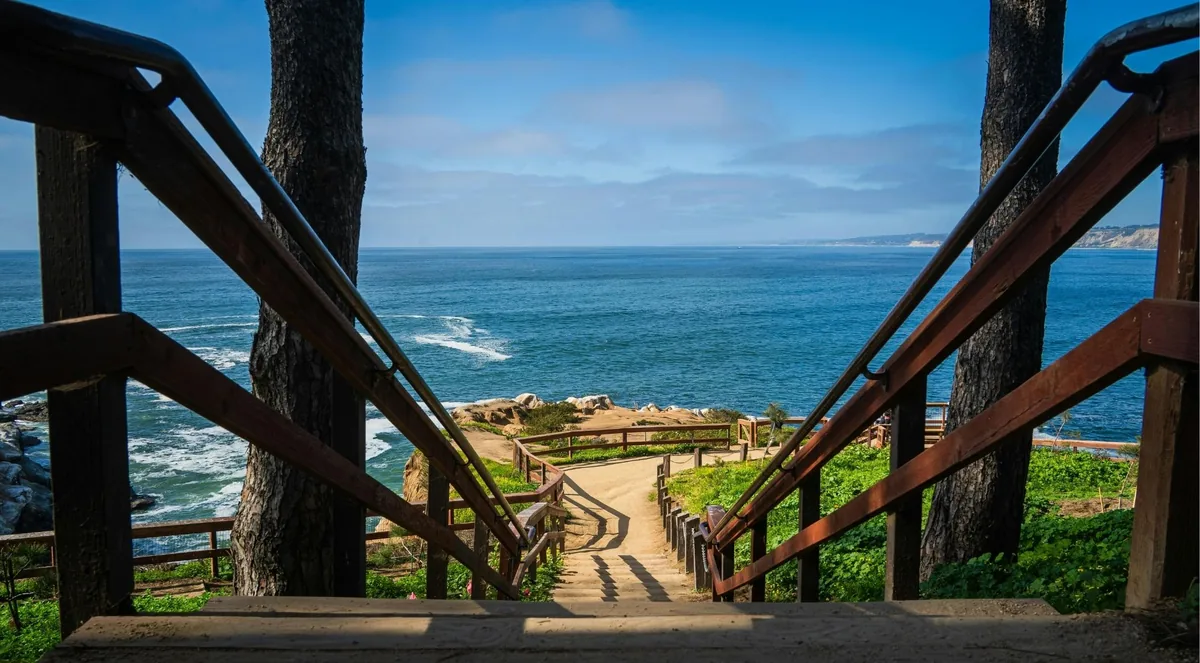
The best time to explore La Jolla tide pools is not determined by the weather, the season or even the time of day.
It is determined by the tide.
At sufficiently low tide, sections of La Jolla’s rocky coastline that are normally underwater become temporarily exposed. Small pools remain between the rocks, creating miniature marine habitats where you may find anemones, crabs, snails, limpets, mussels and other intertidal life.
A few hours later, those same rocks may be completely covered by the Pacific.
For first-time visitors, the easiest tide-pooling areas are around Shell Beach, Dike Rock near Scripps Pier, and sections of coastline between La Jolla Cove and Children’s Pool.
The key is to check the tide before you leave.
Dates and live prices
The same marine life, in deeper water
Tide pooling is free and needs no booking — but it only works around a low tide. When the water is up, the guided snorkel over the same protected reserve is the version of this that runs on any calm day.
Booking through this panel costs you nothing extra and pays this site a commission. It has no bearing on what is recommended above.
La Jolla Tide Pools at a Glance
| Best time to visit | Around low tide |
| Ideal tide | Lower tides expose more of the intertidal zone |
| Best-known spots | Shell Beach, Dike Rock, Coast Boulevard shoreline |
| Cost | Free |
| Best for | Families, photography, marine life, coastal walks |
| Time needed | 30 minutes to 2 hours |
| Footwear | Shoes with good grip |
| Swimming required? | No |
| Can you touch animals? | Best avoided |
| Can you collect shells or marine life? | No in protected ecological areas |
| Main safety issue | Waves and slippery rocks |
What Are Tide Pools?
Tide pools form in rocky coastal areas where seawater becomes trapped as the tide falls.
The organisms living there must tolerate a surprisingly harsh environment.
Within several hours, the same pool can experience changes in water temperature, salinity, wave exposure, sunlight and oxygen levels.
Animals and plants that survive in the intertidal zone are adapted to being submerged at high tide and exposed to air when the ocean retreats.
That makes tide pools a particularly easy way to see marine life without snorkeling or scuba diving.
Are There Tide Pools in La Jolla?
Yes.
La Jolla has extensive rocky shoreline, making it one of the easiest areas around San Diego to look for tide pools when tides are low enough.
Some pools are just a few centimeters deep. Others form larger rocky depressions where small fish and other creatures remain temporarily isolated from the ocean.
Best Tide Pools in La Jolla
1. Shell Beach
Shell Beach is one of the most convenient tide-pool locations for visitors already exploring La Jolla Cove.
The small beach sits just south of the Cove along Coast Boulevard.
At low tide, rocky platforms become exposed and pools form between them.
It is close to La Jolla Cove, easy to add to a coastal walk and near Children’s Pool.
You do not need to make Shell Beach your entire destination. Instead, visit while walking the shoreline between La Jolla Cove and Children’s Pool — see the full La Jolla beaches guide for how Shell Beach fits alongside the Cove and Shores.
2. Dike Rock
For more dedicated tide pooling, Dike Rock is one of La Jolla’s most interesting spots.
It lies north of La Jolla Shores near Scripps Pier.
The rocky reef becomes substantially more exposed during low tides, creating numerous small pools and channels.
Because it is slightly removed from the busiest central La Jolla sightseeing circuit, Dike Rock can feel much more like a natural field site than a tourist attraction.
3. Coast Boulevard Tide Pools
The rocky shoreline stretching south from La Jolla Cove contains numerous small intertidal areas.
Walk toward:
La Jolla Cove → Point La Jolla → Shell Beach → Children’s Pool
and watch for exposed rocks when the tide is low.
This is probably the best option if tide pools are only one part of your day.
4. Hospitals Reef
Farther south along the La Jolla coastline, Hospitals Reef is another rocky area exposed at low tide.
This section is especially appealing to visitors who want to explore a quieter part of the coastline away from the Cove.
At the right tide, broad rock shelves become visible.
5. Windansea Area
Windansea is better known for surfing and sunset, but low tides can reveal rocky sections around the beach.
It is not usually the first tide-pool location recommended to families, because the surf can be powerful and the rocks are exposed to open-ocean waves.
For an easier first experience, use Shell Beach or Dike Rock.
On the water
Snorkel, kayak and paddle trips over the reserve
Guided snorkels over the La Jolla Underwater Park, sea-cave paddles past the seven caves, and gear rentals at La Jolla Shores — for the days the tide is wrong for the rocks.
When Is the Best Time to Visit La Jolla Tide Pools?
The best time is generally around the lowest tide of the day.
A very low tide exposes much more rock than a moderate low tide.
At one tide level, you may find large exposed platforms filled with pools. At another, there may be almost nothing accessible.
How to Check the Tide
Before heading out, look up a reliable tide forecast for La Jolla or San Diego.
Pay attention to:
- Time of low tide
- Height of the low tide
- How quickly the tide will begin rising afterward
A negative tide can expose especially large areas, but even an ordinary low tide may provide worthwhile tide pooling.
When should you arrive?
Try to arrive 30–60 minutes before low tide.
That lets you explore while the water is still falling and gives you time before the tide begins returning.
Do You Need a Negative Tide?
No.
Negative tides can create excellent conditions, but they are not mandatory.
A sufficiently low positive tide may still expose plenty of rocky shoreline.
What matters is how much of the local intertidal zone becomes uncovered.
Best Season for La Jolla Tide Pools
You can encounter tide pools throughout the year, but particularly low daytime tides are more common during certain seasonal periods.
Winter often produces some excellent daytime low-tide opportunities along the Southern California coast.
Rather than planning around a particular month, check the actual tide table for your travel dates.
What Can You See in La Jolla Tide Pools?
Every tide pool is different.
You may encounter:
Sea anemones
These soft-bodied animals often remain attached to rocks inside pools.
Hermit crabs
Look carefully among shells moving slowly across the bottom.
Small shore crabs
Crabs frequently hide beneath rock edges and inside crevices.
Limpets
These small shellfish cling tightly to rock surfaces.
Snails
Several types of marine snails occur in intertidal areas.
Mussels and barnacles
Both are common on wave-exposed rocks.
Small fish
Some pools may trap small fish temporarily until the tide rises again.
Sea stars and sea urchins
Possible, though never guaranteed.
Seaweed and algae
Intertidal plants and algae create habitat and food for many other organisms.
Will You See Octopus in La Jolla Tide Pools?
It is possible, but you should not expect one.
Octopuses are masters of camouflage and can remain almost invisible against rocks.
If you do see an octopus, watch it without touching or attempting to make it move.
Are La Jolla Tide Pools Good for Kids?
Yes — with close supervision.
Tide pools are one of the best ways for children to encounter marine ecosystems without entering deep water.
But rocky shorelines involve real hazards.
Children should be supervised around slippery rocks, sharp shells, sudden waves, deep crevices and rising tides.
Can You Touch Animals in the Tide Pools?
It is better not to.
Touching may stress or injure delicate animals, particularly if visitors repeatedly handle the same organisms.
Instead:
- Observe
- Photograph
- Identify
- Leave everything where you found it
Avoid poking anemones, lifting animals from water or pulling creatures from rocks.
Can You Pick Up Shells?
Do not collect shells, rocks, animals or other natural material from protected sections of La Jolla’s coastline.
Even apparently empty shells can provide habitat for hermit crabs and other organisms.
Photographs make much better souvenirs.
Tide-Pool Etiquette
Follow a few simple principles:
- Look rather than collect.
- Avoid touching animals.
- Walk on bare rock whenever possible.
- Do not step on mussel beds or other living surfaces.
- Leave shells where they are.
- Never chase or move animals for photographs.
- Take all rubbish with you.
- Watch the ocean constantly.
Safety Around La Jolla Tide Pools
The biggest hazard is usually not an animal.
It is the ocean.
Rocky intertidal areas are slippery and exposed to waves.
A location can look completely calm for several minutes before a larger set arrives.
Essential safety rules
- Never turn your back on the ocean
- Keep children close
- Wear shoes with grip
- Avoid wet algae-covered rocks when possible
- Stay away from cliff edges
- Do not explore isolated rocks as the tide rises
- Leave before water cuts off your exit route
- Follow lifeguard warnings and posted signs
If waves are breaking forcefully across the rocks, choose another day.
What Shoes Should You Wear?
Shoes with good grip are much better than flip-flops.
Good options include:
- Water shoes
- Secure sandals with tread
- Trail shoes you do not mind getting wet
- Sturdy trainers
Avoid smooth-soled footwear.
What Should You Bring?
For a simple tide-pool visit:
- Shoes with good traction
- Sunscreen
- Water
- Hat
- Phone or camera
- Light jacket if coastal weather is cool
Useful optional items include polarized sunglasses, a small waterproof camera and a marine-life identification guide.
You do not need nets, buckets or collecting equipment.
How Long Should You Spend Tide Pooling?
Quick visit: 30 minutes
Enough for Shell Beach if you are already sightseeing around the Cove.
Normal visit: 1 hour
Good for families or casual exploration.
Dedicated visit: 1.5–2 hours
Useful at larger areas such as Dike Rock.
Tide Pools Near La Jolla Cove
If you are staying around central La Jolla and do not want to drive, concentrate on the coastline between:
La Jolla Cove and Children’s Pool
The most convenient specific stop is Shell Beach.
This entire stretch can be explored on foot, and low tide may expose several rocky areas along the route.
Tide Pools Near La Jolla Shores
For the Shores area, look toward Dike Rock, north of the main beach near Scripps Pier.
This is a better choice if tide pooling itself is the main purpose of your visit.
A good itinerary is:
Morning low tide at Dike Rock → walk La Jolla Shores → lunch → afternoon La Jolla Cove
Can You See Tide Pools at High Tide?
Usually not very well.
The areas containing the most interesting pools may be underwater.
Trying to explore them while waves are washing over the rocks is also much more dangerous.
If you arrive at high tide, enjoy La Jolla Cove, wildlife and coastal views instead and return during a lower tide.
Parking for La Jolla Tide Pools
Parking depends on which area you visit — see the dedicated parking guide for the Cove specifically.
Shell Beach / Coast Boulevard
Use parking around central La Jolla.
Dike Rock
Parking options around La Jolla Shores and nearby streets vary by location.
If you are visiting specifically for a very low tide, arrive early enough that parking does not cause you to miss the best window.
Because the tide does not wait, punctuality matters.
Can You Combine Tide Pools With the Sea Lions and Seals?
Yes.
Try:
- Start at La Jolla Cove.
- Visit Point La Jolla for California sea lions.
- Walk south toward Shell Beach and explore tide pools if the tide is suitable.
- Continue to Children’s Pool for Pacific harbor seals.
This is a compact route and requires no tour.
Are La Jolla Tide Pools Worth Visiting?
Yes — particularly if your visit coincides with a good low tide.
Unlike snorkeling or kayaking, tide pooling requires no booking, no special equipment, no swimming ability and no admission fee.
And yet it gives you direct access to one of the most interesting ecosystems on the La Jolla coastline.
The catch is timing.
Visit at high tide and there may be almost nothing to see. Visit at a very low tide and the shoreline transforms.
The Bottom Line
The secret to seeing the La Jolla tide pools is simple:
Check the tide first, choose the location second.
For an easy visit near the main attractions, explore Shell Beach and the rocky shoreline between La Jolla Cove and Children’s Pool.
For a more dedicated tide-pooling experience, head to Dike Rock near La Jolla Shores.
Arrive before low tide, wear shoes with good grip, keep an eye on the Pacific and resist the temptation to touch or collect what you find.
The reward is one of La Jolla’s best free experiences: a part of the Pacific seafloor temporarily revealed, filled with tiny marine habitats that disappear again as soon as the tide returns.
La Jolla Tide Pools — FAQ
Timing, safety and what actually lives in them.
Shell Beach is one of the easiest for visitors near La Jolla Cove, while Dike Rock near Scripps Pier is one of the strongest options for a dedicated tide-pooling trip.
Visit around low tide, ideally arriving 30–60 minutes before the lowest point.
No, but very low or negative tides generally expose more of the rocky shoreline.
Yes. Tide pooling along public shoreline areas is free.
Anemones, crabs, snails, limpets, barnacles, mussels, small fish, seaweed and occasionally other intertidal animals.
It is best to observe without touching or moving them.
Do not remove shells, animals, rocks or other natural objects from protected marine areas.
They can be excellent for children with close adult supervision. Rocks can be slippery, waves unpredictable and crevices surprisingly deep.
Shoes with good traction are the most important item. Avoid slippery flip-flops.
Yes. Walk south from the Cove toward Shell Beach and Children's Pool during low tide.
The sandy central beach is not the main tide-pooling area, but Dike Rock near the northern end of the Shores is a well-known rocky intertidal zone.
Still have questions? Email us at info@la-jolla-cove.org