Offshore
The La Jolla Underwater Park
Also called the San Diego-La Jolla Underwater Park, the Ecological Reserve, Matlahuayl State Marine Reserve
Last checked
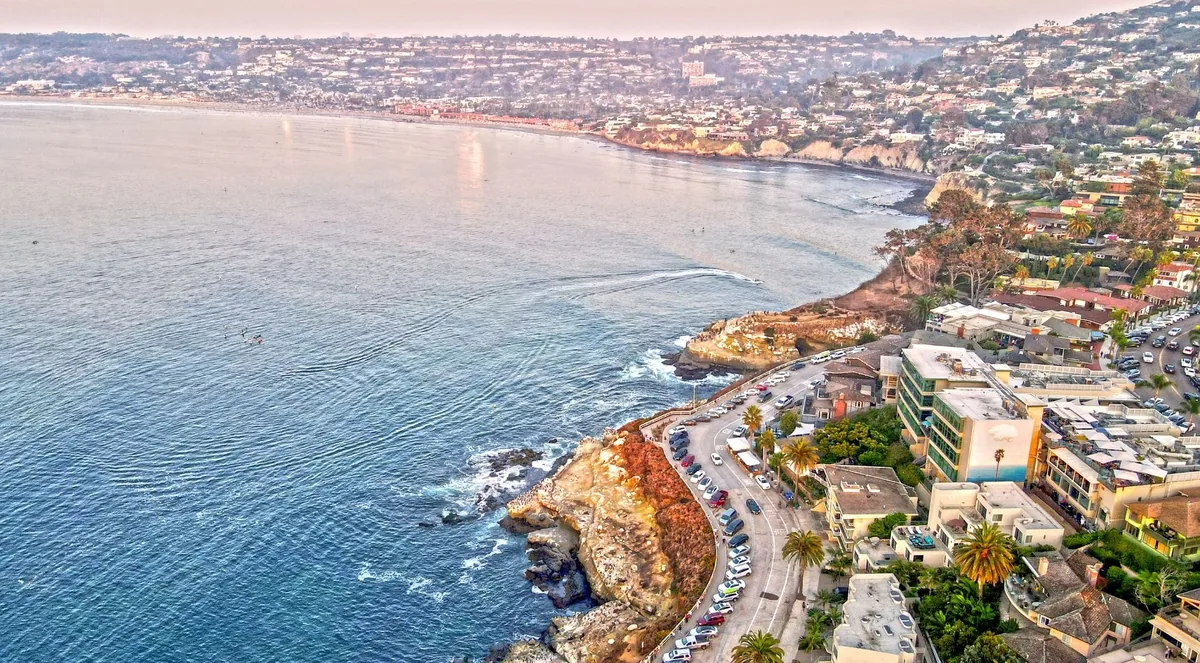
Free, protected, and open every day of the year — the reason the fish at the Cove do not swim away from you.
Need to know
- What it is
- 5,977-acre protected waters the Cove sits inside
- Admission
- Free — open water, but a no-take reserve: no fishing, no collecting
- Hours
- Open water, year-round
- Shore
- Kelp forest, reef, and two submarine canyons
- Swimming
- YES — that is the point; entry from the Cove or Shores
- Snorkeling
- YES — the reason the fish are not afraid of you
- Parking
- Unknown
- Restrooms
- Unknown
- Lifeguard
- Unknown
- Dogs
- Unknown
- Getting in
- From La Jolla Cove (reef) or La Jolla Shores (sand/canyon)
- Coordinates
- 32.85809, -117.26541
Established by the City in 1970; the no-take Ecological Reserve is now the Matlahuayl State Marine Reserve. No fishing, no collecting — including shells.
Most people on the sand at La Jolla Shores cannot see the best part of the place. Just offshore lies the San Diego-La Jolla Underwater Park, a large protected area of sandy shallows, rocky reef, kelp and deep submarine canyons, and it is why La Jolla draws so many snorkelers, kayakers, divers, swimmers and leopard-shark watchers.
The City of San Diego gives the park’s size as 5,977 acres of tidal and submerged land, running north along the coast from the La Jolla Cove area. It protects marine plants and animals, geological formations, archaeological sites and the underwater scenery itself. You do not need to dive to see it. La Jolla Cove and La Jolla Shores are the two easy ways in, and a kayak trip shows you how the beaches, cliffs, sea caves and reef fit together.
The underwater park at a glance
| Location | Off La Jolla, San Diego |
| Size | 5,977 acres |
| Easiest access | La Jolla Cove and La Jolla Shores |
| Good for | Snorkeling, kayaking, scuba diving, marine life |
| Cost to enter | Free |
| Kayaking | Yes |
| Snorkeling | Yes |
| Scuba diving | Yes |
| Swimming | Yes |
| Fishing in the reserve | Prohibited |
| Taking shells, rocks or animals | Prohibited in the reserve |
| Best-known wildlife | Leopard sharks, garibaldi, rays, sea lions |
| Easiest entry for beginners | La Jolla Shores |
| Best snorkeling entry | La Jolla Cove, or the Shores on calm days |
Other ways onto the water
Kayaks, caves and snorkel trips in the park
Sea-cave paddles from La Jolla Shores, kayak-and-snorkel combos along the seven sea caves, sunset trips past Goldfish Point and gear rental for La Jolla Cove, with live prices for your dates.
What the La Jolla Underwater Park is
Think of it as a large ocean park where nearly everything worth seeing is under the surface. Inside it you find sandy seafloor, rocky reef, kelp, shallow coastal water, sea caves, submarine canyons and open water. That range of habitat in a small area is why La Jolla holds so many species, and why it is one of the best places in Southern California to put your face in the water.
Is the underwater park the same as the marine reserve?
Not exactly. Several protected areas overlap off La Jolla. The San Diego-La Jolla Underwater Park is the broader area the City set aside in 1970. Inside and next to it, the state runs stricter marine protected areas: Matlahuayl State Marine Reserve and the San Diego-Scripps Coastal State Marine Conservation Area.
For visitors the rule is short: enjoy the water and the wildlife, and leave every animal, rock and shell where you found it.
Matlahuayl State Marine Reserve
The California Department of Fish and Wildlife describes Matlahuayl as just over one square mile (1.04 square miles), from the shoreline out to depths of more than 330 feet. It covers the water from the La Jolla Cove area north toward Scripps Pier, and La Jolla Cove lies inside it. No take of any kind is allowed: nothing living, geological or cultural may be removed. That protection is a large part of why the snorkeling, diving and wildlife off the Cove and the Shores are so good.
Can you swim in the underwater park?
Yes. Swimming and other water sports are allowed in the reserve, as long as you follow the rules and the lifeguards. The two easiest places to get in are:
La Jolla Cove
Best for snorkeling, marine life and rocky reef, and for strong swimmers who are fine with a small beach.
La Jolla Shores
Best for an easy sandy entry, families, ordinary swimming, first-time snorkelers, kayak launches and scuba diving.
Conditions change from day to day, so check them before you go in and swim near a lifeguard tower. Our swimming beaches guide compares both with the rest of San Diego.
Snorkeling in La Jolla Underwater Park
Snorkeling is the easiest way into the park. You need no boat, no certification and no expensive gear, and the two main entry points are La Jolla Cove and La Jolla Shores. If you have no gear, the La Jolla Full-Day Snorkel Gear Rental with Wetsuit Option rents a mask, fins and wetsuit for the day (4.2/5, but from only 14 reviews, so read the latest ones before you book).
Snorkeling at La Jolla Cove
La Jolla Cove is the best-known snorkeling spot. The small beach sits between sandstone cliffs and opens straight onto protected reef, and the City notes that visibility here can occasionally exceed 30 feet. On many days it is much less.
Why snorkel at the Cove?
The rocky reef holds fish and other marine life close to shore. You may see garibaldi, schools of small fish, rays and, in the wider area, sea lions. Nothing is guaranteed, and swell, algae, wind or a recent storm can cloud the water. Our pick for a first visit is the San Diego: La Jolla Cove Snorkeling Tour, Sea Lions & Caves (4.9/5 from 160 reviews), a guided swim of the Cove with a wetsuit included. Our snorkeling guide covers the spots, the conditions and going on your own.
Snorkeling at La Jolla Shores
The Shores gives you a different kind of snorkel. You walk into the Pacific off a wide sandy beach instead of a small rocky cove, and many people find that easier. It matters most in leopard shark season, from June to December, when the sharks gather in shallow water off the south end of the beach.
Leopard sharks at La Jolla Shores
The leopard sharks are the best-known seasonal sight in La Jolla’s protected water. From June to December, with the largest numbers in August and September, mostly pregnant female leopard sharks gather in the warm shallows off the Shores, near the Marine Room. You can tell them by the dark saddle-shaped markings along their backs. They are one of the sharks most often seen along the California coast.
Are La Jolla leopard sharks dangerous?
They are not considered a threat to snorkelers, and they usually move off when people come too close. That is no reason to chase, surround or try to touch them. You see more if you float calmly and let them pass.
When can you see leopard sharks?
From June to December, peaking in August and September. Numbers change from year to year and through the season, and a warm, calm day can look very different from a windy one with poor visibility. Treat them as a likely sighting in season, not a scheduled show.
Can you snorkel with leopard sharks?
Yes, and it has become one of the best-known summer and early-fall things to do at the Shores. Confident swimmers can go on their own when conditions are good. A guide helps if you have little snorkeling experience, want help finding the sharks or do not know the ocean here. We found no leopard-shark-specific snorkel tour on GetYourGuide or Viator; the nearest bookable trip from the Shores is the La Jolla 1.5-2 Hour Kayak and Snorkel Tour (4.1/5 from 213 reviews).
Kayaking in La Jolla Underwater Park
A kayak shows you the whole stretch of coast, not only what lies under you. Most commercial trips launch from La Jolla Shores and paddle south through the protected water toward the sandstone cliffs, La Jolla Cove, the seven sea caves, the kelp and the sea lions.
Do you need a guided kayak tour?
Not always, but a guide helps on a first visit. Take a tour if you have little ocean-kayaking experience, want to see the sea caves, want someone to explain the marine life or have never launched through surf. Our pick is the two-hour La Jolla Sea Cave Kayak Tour (4.4/5 from 803 reviews); the 90-minute Sea Cave Kayaking Tour with Guide (4.6/5 from 272 reviews) suits a shorter morning. The kayak tours ranking compares them all.
A rental suits experienced paddlers who know surf launches and the coast. GetYourGuide lists no La Jolla kayak rental; Viator sells the Kayak Rental for Two People in La Jolla (4.6/5 from 89 reviews, 90 minutes in a double kayak).
Can kayaks enter the La Jolla sea caves?
Sometimes. The caves sit in the cliff between the Cove and the Shores, and they are the main reason people book kayak tours. Getting inside depends on conditions: waves and surge can make a cave unsafe even when paddling outside it is fine. Seeing the cave mouths and cliffs from water level is a highlight either way.
Scuba diving at La Jolla Shores
La Jolla Shores is one of San Diego’s main shore-diving sites. The sandy beach makes for an easy entry, and deep water lies offshore. Experienced divers head farther out to very different ground, including the submarine canyon. If you are not certified, book an introductory dive or a certification course with a professional dive shop; we found no La Jolla scuba experience on GetYourGuide or Viator to recommend.
La Jolla Underwater Canyon
The seafloor drops away sharply off La Jolla. From the beach the water looks like plain blue horizon; underneath, the ground is far more complicated. That steep change in depth is one reason so many different habitats sit so close together here.
Marine life in La Jolla Underwater Park
Depending on season, habitat and luck, you may see:
- Garibaldi
- Leopard sharks
- Bat rays
- Stingrays
- California sea lions
- Harbor seals
- Schools of smaller fish
- Lobsters
- Moray eels
- Fish that live in the kelp
- Seabirds overhead
Dolphins and other large animals sometimes pass farther offshore. No single trip shows you everything.
Garibaldi
The fish you notice first is usually the bright orange garibaldi, California’s state marine fish, which stands out against rock and kelp. Watch them, but do not chase or feed them.
Rays
Several kinds of ray live in Southern California waters, and snorkelers and kayakers off La Jolla sometimes see them gliding over the sand. Shuffle your feet as you walk into shallow sandy water, instead of running or stamping through the surf.
Sea lions and harbor seals
California sea lions are easiest to see around Point La Jolla and La Jolla Cove; Pacific harbor seals are tied to the Children’s Pool. Both swim through the water around them. Do not follow them or try to interact. Our sea lion guide has the viewing rules and the best spots.
Is there a kelp forest in La Jolla?
Yes. Kelp is an important part of La Jolla’s marine life: giant kelp shelters fish and invertebrates and makes one of Southern California’s signature underwater scenes. To see it up close, scuba diving gets you much farther into the kelp than snorkeling off the beach.
Best places to enter the underwater park
La Jolla Cove
Best for snorkeling, swimming, rocky reef and marine life.
La Jolla Shores
Best for kayaking, scuba diving, leopard sharks, sandy entry and families.
Scripps Pier area
Best for exploring the north end of the Shores and the nearby Dike Rock tide pools; see our tide pools guide.
La Jolla Cove vs La Jolla Shores for snorkeling
| La Jolla Cove | La Jolla Shores | |
|---|---|---|
| Entry | Small beach | Wide sandy beach |
| Habitat | Rocky reef | Mostly sand near shore |
| Marine life | Excellent year-round | Excellent in leopard shark season |
| Leopard sharks | Seen less often | June to December |
| Families | Less space | Easier beach day |
| Kayaking | Not the main launch | The main launch |
| Diving | Popular | A major shore-diving site |
| For beginners | Depends on conditions | Usually the easier entry |
| Our pick | La Jolla Cove Snorkeling Tour (4.9/5 from 160 reviews) | Kayak and Snorkel Tour (4.1/5 from 213 reviews) |
If snorkeling is your main plan, check the conditions at both on the day and pick the calmer one.
Best time to visit La Jolla Underwater Park
No single month suits every activity.
Summer
Leopard sharks, warm beach weather and the busiest kayaking and snorkeling, and also the biggest crowds.
Autumn
Often pleasant on the coast, with fewer people than in peak summer; the leopard sharks stay into December.
Winter
Good for coastal walks, diving, wildlife and low-tide exploring on suitable days. The ocean changes more from day to day.
Spring
A good mix of outdoor activities before the summer crowds arrive.
In every season, visibility, swell and wind matter more than the date.
Best time of day
Many people snorkel and kayak in the morning, when the wind is often lighter, the beaches are quieter and parking is easier. Mornings are not always calm, though, so check the conditions. For tide pools, go by the tide table, not the clock.
Is the underwater park free?
Yes. There is no admission fee to swim, snorkel or use the public beaches. You pay only for what you choose: kayak tours, snorkel tours, gear rental, scuba diving, parking where it is charged, or surf lessons such as the Learn to Surf in La Jolla lesson on Viator (4.8/5 from 64 reviews). Our parking guide covers what parking costs near the Cove and the Shores.
Can you fish in La Jolla Underwater Park?
Do not assume you can fish because you are on a public beach. No-take rules apply inside the marine reserve. The boundaries and rules are complicated, so anglers should read the current California Department of Fish and Wildlife regulations before fishing anywhere off La Jolla.
Can you take shells from La Jolla?
Not from the reserve. In a no-take reserve, natural material stays where it is: do not collect shells, animals, plants, rocks, geological material or archaeological objects. Take photographs instead.
Is La Jolla Underwater Park good for kids?
Yes, if you match the activity to your child’s age and swimming. Good family choices include the beach at La Jolla Shores, the tide pools, kayaking for older children, snorkeling for confident swimmers and the Birch Aquarium for the same sea life on land. The main mistake is assuming that protected water is safe water. It is still the Pacific Ocean.
Ocean safety
The park is protected for the animals, not for you: waves, currents and cold water are still hazards. Before you go in:
- Check the day’s conditions
- Swim near a lifeguard tower
- Know your limits
- Stay out of rough water
- Never snorkel alone
- Keep children close
- Keep away from cliffs and rocks when the swell is big
- Follow the lifeguards’ instructions
If you are unsure about the conditions, ask a lifeguard.
Don’t chase wildlife
One of the most important rules is also one of the simplest: let the wildlife come to you. Do not chase leopard sharks, swim straight at seals, crowd sea lions, touch rays, feed fish or pick up animals. Animals that behave normally are better to watch than ones you have pushed into an encounter.
Is La Jolla Underwater Park worth visiting?
Yes, though visiting it does not mean walking through a gate into an attraction. You experience the park through the coast: you swim through it, snorkel over it, kayak across it, dive into it or look down on it from the cliffs. What sets it apart is how many different marine habitats sit in such a small area.
For the fullest day, start at La Jolla Shores with a morning kayak or, from June to December, a snorkel with the leopard sharks. Then head to La Jolla Cove in the afternoon for the reef, the garibaldi and the sea lions. Check the surf report and tour times for your exact date, because conditions on the water can change how much of the plan works.
Nearby places
Ordered by measured walking time from this spot, not by how the names sound.
- La Jolla Cove 1 min the rocky-reef entry and the clearest snorkeling water
- The Seven Sea Caves 5 min the cave cliff the kayak tours paddle along
- Marine Room Shallows 20 min where the leopard sharks gather off the Shores
- La Jolla Shores 20 min sandy entry, kayak launches and shore diving
- Birch Aquarium at Scripps 10 min the same sea life on land, by car from the Shores
Choose somewhere else if…
- You have young children or are a nervous swimmer. Start on the flat sand and gentle surf at La Jolla Shores →
- The swell is up and nobody should be in the water. You can still look down on the reserve from the Coast Walk Trail →
Underwater Park Questions
Free water, strict rules, and where to get in.
A protected marine park covering 5,977 acres of tidal and submerged land off La Jolla, set aside by the City of San Diego in 1970. The state's no-take Matlahuayl State Marine Reserve lies within it.
Offshore along the La Jolla coast, north from the La Jolla Cove area. La Jolla Cove and La Jolla Shores are the two easiest ways in for visitors.
Yes. There is no entrance charge to swim or snorkel. Tours, gear rental and parking are optional extras.
Yes to all three. La Jolla Cove and La Jolla Shores are the main snorkeling entries, kayak tours launch from the Shores and paddle toward the sea caves, and the Shores is one of San Diego's best-known shore-diving sites.
From June to December, with the most in August and September, in the shallow water off the south end of La Jolla Shores. Snorkelers can float among them; they are not considered a threat, but do not touch, chase or surround them.
Garibaldi, leopard sharks, rays, California sea lions, harbor seals, schools of small fish, lobsters and moray eels are all possible. Sightings depend on season, conditions and luck.
La Jolla Cove is better for rocky reef and fish. La Jolla Shores gives an easier sandy entry and is the place for the leopard sharks from June to December.
No. Matlahuayl is a no-take reserve: no fishing and no collecting of shells, rocks, animals, plants or artifacts. Anglers should check the California Department of Fish and Wildlife rules before fishing anywhere off La Jolla.
Still have questions? Email us at info@la-jolla-cove.org
What we could not establish
- A single published map that overlays the city park and the state reserve. The City describes the Underwater Park by area and the state describes Matlahuayl by coordinates; we found no official page that shows both lines together. For snorkeling and kayaking it does not change anything: the Cove and the water off the Shores are inside the no-take reserve.
Sources
- Underwater Park area, 5,977 acres of tidal and submerged land: City of San Diego Fast Facts (sandiego.gov), checked 17 October 2026.
- Cove visibility can occasionally exceed 30 feet: City of San Diego Lifeguards, La Jolla Cove (sandiego.gov), checked 17 October 2026.
- Matlahuayl State Marine Reserve, 1.04 square miles, no take of any living, geological or cultural marine resource, La Jolla Cove inside the reserve: California Department of Fish and Wildlife (wildlife.ca.gov), checked 17 October 2026.
- Leopard shark season, June to December with the peak in August and September: KPBS, 18 August 2017 (kpbs.org).
Where it is
La Jolla Underwater Park & Ecological Reserve sits in the Offshore. Open it on the map to see what else is within a short drive.
See La Jolla Underwater Park & Ecological Reserve on the map