La Jolla Cove Sea Lions
The best legal view is from the Scripps Park walkway above Point La Jolla — the rocky point itself has been closed to people year-round since 2023, and the walkway looks straight down onto the colony from a few dozen feet. The Cove rocks and the Children's Pool seawall (harbor seals, not sea lions) complete the circuit, all free, all within a half-mile walk.
Last checked Viewing-access facts rechecked with the closure status — next scheduled recheck before the May 2027 pupping season.
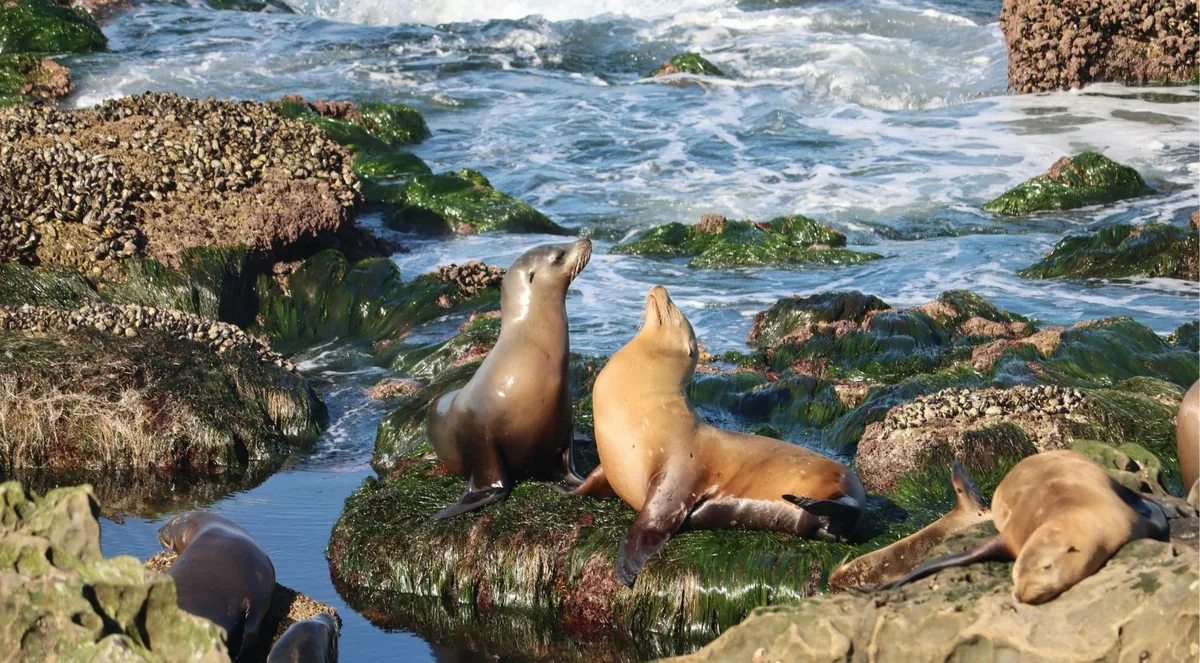
The view from the water
Seeing the colony from sea level, legally
You may not approach the haul-outs on land — the closures and the 50-yard rule see to that. The legal close look is from the water: guided snorkel tours of the Cove routinely watch sea lions swim underneath the group, at the animals' own choosing. The guides keep the distance honest; the sea lions ignore the rules and buzz you anyway.
Booking through this panel costs you nothing extra and pays this site a commission. It has no bearing on what is recommended above.
The Scripps Park walkway above Point La Jolla
Closed year-roundSea lion rookeryView from walkway
The main haul-out, viewed from directly above: dozens to hundreds of sea lions on the rocks, pups in season, bulls arguing over ledges — all from a legal, railed walkway a short stroll from the Cove stairs. Since the 2023 closure removed people from the rocks, the colony has grown and the viewing has only improved.
Against it: It smells exactly like a sea lion colony, and midday thins the crowd — many animals are out hunting. Come morning or late afternoon.
The Cove rocks and bluffs
Free entryLifeguardedMarine reserve#1 US beach 2026
Sea lions haul out on the rocks flanking the Cove beach itself, so swimmers and snorkelers often get (involuntary) close passes in the water. From the sand and the overlook you can watch them surf the swell back onto the rocks.
Against it: The beach is small and busy, and the temptation to creep close for a photo is exactly what the harassment law — and the 2026 prosecution — exists for. Fifty yards, even here.
Children's Pool seawall (the harbor seals)
Harbor sealsClosed Dec 15–May 15Seawall walk
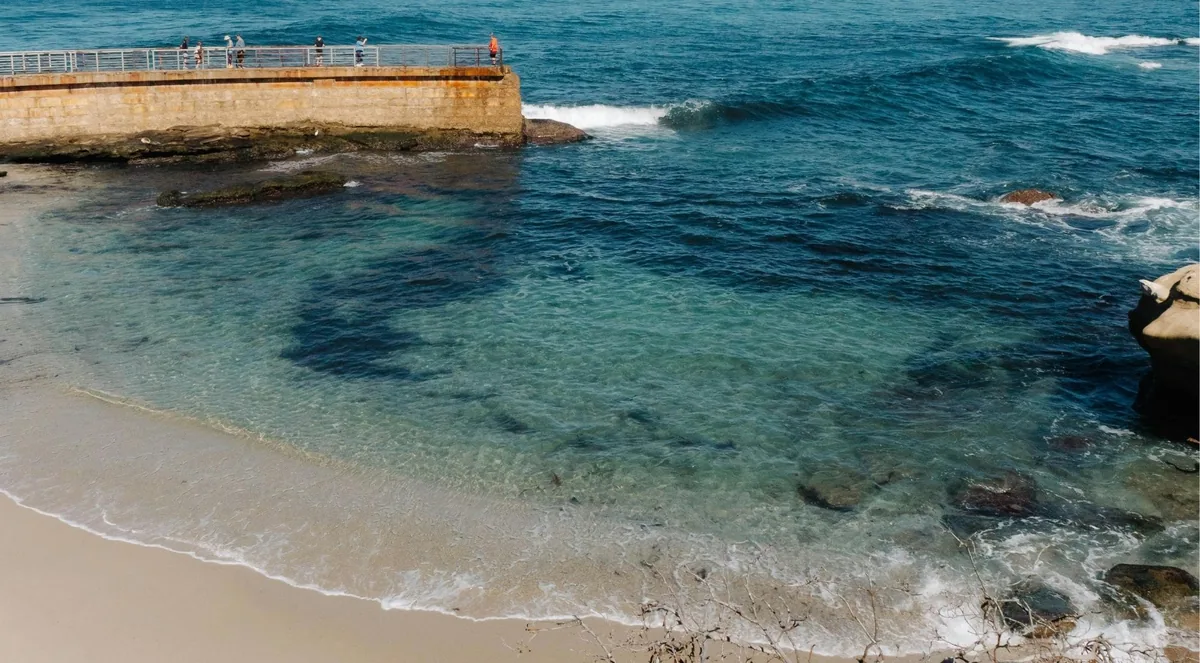
A different species and a different mood: Pacific harbor seals — smaller, quieter, spotted — lie on the sheltered sand behind the 1931 seawall, with Seal Rock offshore. The walk along the wall is one of the best free wildlife views in California.
Against it: Do not arrive expecting barking sea lions; the seals mostly nap. The beach itself closes December 15 – May 15 for pupping, though the seawall walkway stays open.
Where the evidence contradicts the consensus
You can get close for a selfie if you're calm and respectful.
Distance, not demeanor, is the law. Changing an animal's behavior at all is harassment under the Marine Mammal Protection Act; NOAA's guidance is 50 yards, more around pups. In August 2026 an 18-year-old pleaded guilty to a federal violation for kicking a sea lion here. They also bite and charge.
The seals and sea lions are the same animals.
Two species, two locations. California sea lions — ear flaps, loud bark, males to roughly 600–850 lb, 'walking' on large front flippers — hold the Cove and Point La Jolla. Pacific harbor seals — no ear flaps, quiet, moving on their bellies — hold Children's Pool, a half-mile south.
The sea lions lie on the Cove beach for you to walk among.
They haul out on rocks and bluffs, and the areas where they mass are the ones now closed to people. The animals come to the sand sometimes; that is their right of way, not an invitation.
Where exactly to stand
Start at the Cove overlook on Coast Blvd, then follow the walkway west past the gazebo into Ellen Browning Scripps Park — the railed stretch above Point La Jolla is the main event. Continue south along Coast Blvd about half a mile (10–15 minutes) to the Children’s Pool seawall for the harbor seals and Seal Rock. The whole circuit is flat, free, stroller-friendly, and comfortably done in an hour with viewing stops.
The rules, plainly
Stay 50 yards from seals and sea lions wherever you can; where the geography makes that impossible (the walkways pass closer), stay on the paths, keep quiet, and never touch, feed, corner or pursue an animal. Drones, dogs and flash photography all count as disturbance. The closures — Point La Jolla year-round, Children’s Pool beach in winter — are marked on site and tracked on this site’s status page.
Getting on the water
Kayak, snorkel and paddle from La Jolla Shores
Six of the seven sea caves have no land entrance, and no tour launches from the Cove itself — everything on the water leaves from La Jolla Shores, a mile north.
The calendar
Sea lions: visible year-round; pupping runs May through October, when mothers nurse on the rocks and the colony is at its loudest. Harbor seals: year-round at Children’s Pool; pups arrive late January–February, which is why that beach closes December 15 – May 15. Time of day: animals are present all day but thinner at midday, when many hunt; mornings and the two hours before sunset are the reliable windows.
Sea lion or seal? The ten-second check
Ear flaps you can see: sea lion. Barking you can hear across the park: sea lion. Walking on rotated front flippers: sea lion. No ear flaps, spotted coat, silent, hauling itself on its belly like a sandbag: harbor seal. In La Jolla the shortcut is geographic — the loud ones own the Cove and the Point; the quiet ones own Children’s Pool.
Sea Lion Questions
The rules, the seasons, and the difference nobody explains.
No. Approaching, touching, feeding or changing the behavior of a seal or sea lion is harassment under the federal Marine Mammal Protection Act — an 18-year-old was charged under it in August 2026 for kicking a sea lion here. NOAA's rule of thumb is 50 yards of distance, more around mothers with pups. Sea lions can bite and charge.
They are different species in different places. California sea lions — loud, barking, with visible ear flaps, males up to about 850 lb — rule La Jolla Cove and Point La Jolla. Pacific harbor seals — smaller, quieter, spotted, no ear flaps — gather at Children's Pool, a half-mile walk south.
May through October, per the City of San Diego. Harbor seal pups at Children's Pool come earlier: most are born late January to February, which is why that beach closes December 15 to May 15.
The resident sea lion and seabird colonies. It is a real, frequently mentioned feature of the bluffs, strongest on warm still days near the haul-outs, and it fades as you move away from the rocks. It is the trade-off for wildlife this close.
No — Point La Jolla and Boomer Beach have been closed to people year-round since September 2023 to protect the rookery. The Scripps Park walkway above stays open and is the legal viewing spot. Current details live on the status page.
Still have questions? Email us at info@la-jolla-cove.org
What we could not establish
- How many sea lions you will see on a given day. Reporting gives event counts — 56 births near the Cove between June and August 2026 — but no authoritative population total for the rookery, and how many haul out swings with season, tide and time of day. They are ashore year-round and thinnest at midday, when they hunt: come early or late.
Sources
- NOAA Fisheries — marine mammal viewing guidance (≥50 yards; harassment under the MMPA).
- City of San Diego — Point La Jolla closure (year-round since Sept 2023); pupping season May–October.
- The Marine Mammal Center — species facts (size, ear flaps); lajolla.ca — species locations.
- Times of San Diego / NBC San Diego, August 2026 — the harassment prosecution and 2026 birth/death counts. Re-verified 31 August 2026.
Compare them on the map
Every place in this ranking is on the map, alongside the ones that are not.